What flashing does
Flashing is thin metal, often steel, aluminum, or copper. It lines the places where a roof meets something else, such as a chimney, a wall, or another roof plane. It sends water over the joint and away from the wood below.
A roof can have perfect shingles and still leak at one bad flashing joint. Our post on signs you need a new roof lists rusted and loose flashing as a key warning.
Flashing types and where they go
| Spot | Flashing type | How it works | Common failure |
|---|---|---|---|
| Eave and rake edges | Drip edge | Guides water into the gutter and off the fascia | Missing on older roofs |
| Roof-to-wall joints | Step flashing | Small pieces woven between shingle courses | Rust, or reused old pieces |
| Chimneys | Base, step, and counter flashing | Metal runs up the brick and into the mortar joint | Cracked caulk and open mortar joints |
| Valleys | Metal valley or woven shingles | Channels water from two slopes | Worn metal, debris, and ice buildup |
| Pipes and vents | Pipe boots | Rubber or metal collars seal the pipe | Cracked rubber from sun and age |
| Skylights | Kit or custom pieces | Metal surrounds the frame | Seal failure at corners |
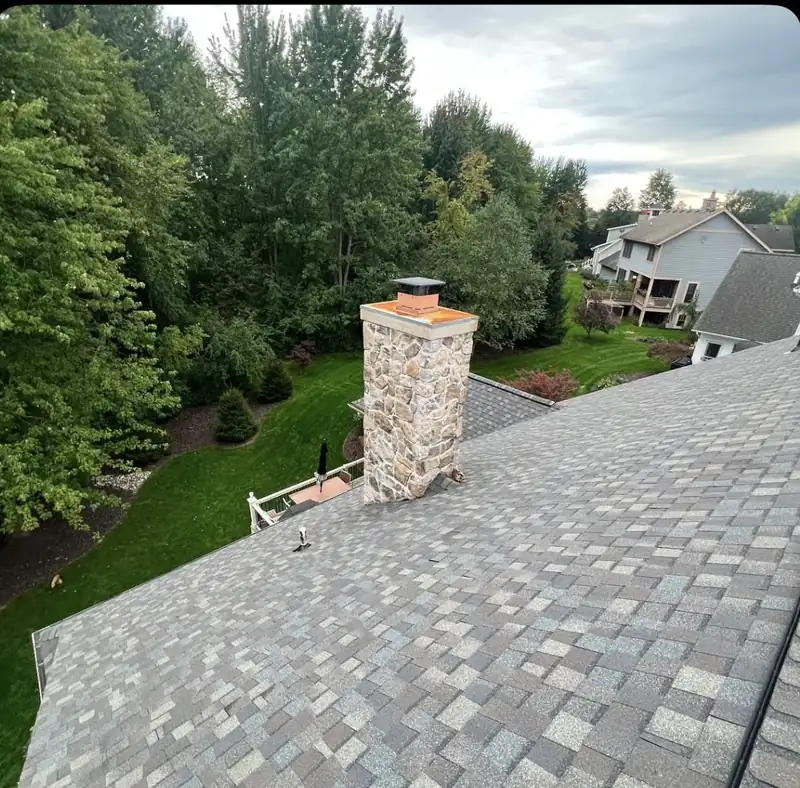
Why Grand Rapids roofs stress flashing
West Michigan sees about 75 inches of snow a year, plus repeated freeze and thaw. Metal and masonry move at different rates. Water gets into small cracks, freezes, and widens them. Wind-driven rain adds pressure. These stresses work on flashing every season.
Ice dams add more risk at valleys and eaves. Our ice dam guide explains how an ice barrier backs up the flashing.
Why caulk is not a fix
Roofing cement and caulk dry out and crack within a few years. A quick smear over rusty metal hides the problem and fails again. A real repair removes the old piece and installs new metal that laps correctly. Water should flow over each overlap, never against it.
The Asphalt Roofing Manufacturers Association and the National Roofing Contractors Association publish guidance on flashing details. Good crews follow it.
Common flashing mistakes
- Reusing old flashing. Old metal bends, rusts, and holds nail holes. New metal costs little during a tear-off.
- Skipping step flashing at walls. One long strip cannot shed water like woven pieces.
- Missing kickout flashing. This small piece sends water from a roof edge into the gutter. Without it, water runs down the wall.
- Flashing set in the wrong order. Each piece must overlap the one below it.
- Mixing metals. Some metals corrode when they touch. Use matching types.
- Sealing a chimney with caulk only. Mortar joints need a proper cut-in counter flashing.
How to spot a flashing problem
Check from the ground and from the attic. Look for brown stains on ceilings near chimneys and walls. Look for daylight or damp wood around pipes. On the outside, watch for rust streaks, gaps, loose caulk, and bent metal. Do not climb the roof. A trained crew can document what they find with photos.
What a proper flashing job includes
- Remove old flashing down to clean wood or masonry.
- Install ice barrier in valleys and at wall joints.
- Set new metal in the right overlap order.
- Cut counter flashing into the mortar at chimneys and seal it.
- Replace pipe boots with new ones.
- Photograph the work before the shingles cover it.
See what code requires on our Michigan roofing code guide. We list flashing as its own line in every written quote, so you can compare bids. Our asphalt shingle page shows where flashing fits in the full roof stack.
Get your flashing checked
An old roof with weak flashing often leaks before the shingles fail. Book a free inspection and we will show you photos of every joint.
Common questions
Is roof flashing the same as drip edge?
Drip edge is one type of flashing. It runs along the roof edges. Other types seal chimneys, walls, valleys, and vents.
Can I fix flashing with roofing cement?
Only as a short-term patch. Cement cracks and fails within a few years. A proper fix replaces the metal.
Should flashing be replaced with a new roof?
In most cases, yes. Old flashing rusts and bends. New metal costs little compared with the cost of a leak.
What is kickout flashing?
It is a small angled piece at the end of a wall joint. It sends water into the gutter instead of down the wall.
Keep reading
Asphalt shingles
Shingle types, layers under the shingles, nailing, cost, and lifespan for Grand Rapids homes.
Michigan roofing code
Ice barrier, ventilation, layers, permits, and contractor licensing in plain words.
Signs you need a new roof
Five warning signs to check from the ground before the first snow.